How Much Does Google PageSpeed Insights Really Matter for Your Website?
Author: Chris Budzban
Posted on: January 4, 2026
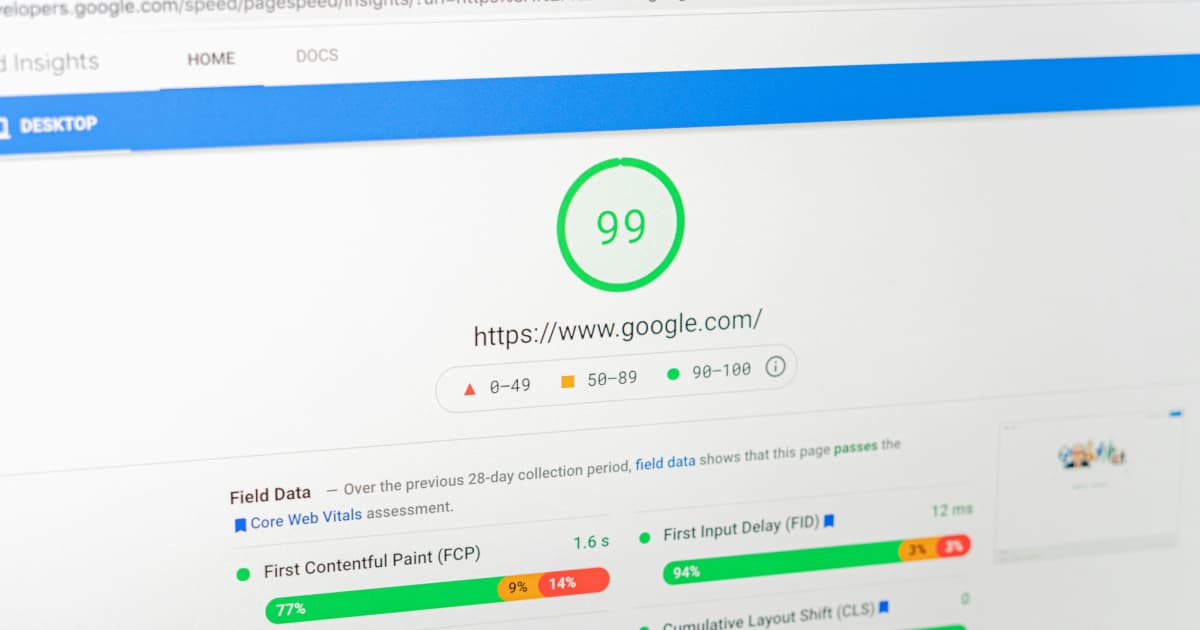
If you’ve ever run your website through Google PageSpeed Insights, you’ve probably felt a mix of curiosity, confusion, and panic — especially if your score wasn’t as high as you hoped.
But how much does Google PageSpeed Insights really matter?
And should small businesses obsess over getting a perfect score?
Let’s break down what the tool actually measures, what Google truly cares about, and how Feldspar Creative helps businesses improve performance without chasing meaningless numbers.
What Is Google PageSpeed Insights?
Google PageSpeed Insights (PSI) is a tool that analyzes your website’s performance and provides:
- performance scores (0–100)
- Core Web Vitals data
- improvement recommendations
It pulls data from two sources:
- Field data – real user experiences (most important)
- Lab data – simulated tests (helpful, but theoretical)
Understanding the difference is critical.
Do PageSpeed Scores Affect SEO Rankings?
Yes — but not in the way most people think.
Google does not rank websites based on a PageSpeed “score.”
Instead, Google uses Core Web Vitals, which measure:
- Largest Contentful Paint (LCP) – how fast main content loads
- Interaction to Next Paint (INP) – how responsive the site feels
- Cumulative Layout Shift (CLS) – visual stability
If your site meets acceptable thresholds, you’re in good shape — even if your score isn’t perfect.
Why a 100 PageSpeed Score Isn’t the Goal
Chasing a perfect score often leads to:
- disabling useful scripts
- breaking functionality
- over-optimizing assets
- poor user experience
Many high-performing, high-ranking websites score 70–90 — and that’s completely normal.
A website that loads fast and works well will always outperform a “perfect” site that frustrates users.
Common Reasons Small Business Sites Score Poorly
Some issues are easy to fix. Others are structural.
Common causes include:
- page builders and bloated themes
- unoptimized images
- excessive JavaScript
- third-party scripts (chat, tracking, embeds)
- cheap or overloaded hosting
Tools like PageSpeed Insights highlight these problems — but they don’t always explain which ones actually matter.
Desktop vs Mobile Scores: Why Mobile Matters More
Mobile performance is far more important than desktop:
- Google indexes mobile-first
- slower networks expose performance issues
- real users feel delays more clearly
A site that scores well on desktop but poorly on mobile is often losing traffic without realizing it.
What Actually Matters More Than the Score
Instead of focusing on a number, focus on:
- how fast pages feel
- how quickly content becomes usable
- whether users can interact immediately
- bounce rate and engagement
Performance is about real users, not lab results.
How Feldspar Creative Approaches Performance
At Feldspar Creative, we don’t optimize for scores — we optimize for outcomes.
That means:
- modern, lightweight site builds
- performance-focused architecture
- properly optimized images and assets
- minimal scripts and dependencies
- SEO-friendly, accessible code
Whether we’re building a new site or improving an existing one, performance is baked in from day one.
When You Should Pay Attention to PageSpeed Insights
PageSpeed Insights is valuable when used correctly:
- diagnosing real performance issues
- validating improvements
- monitoring Core Web Vitals
- identifying major bottlenecks
It’s a tool — not a report card.
Final Thoughts: Speed Matters, Obsession Doesn’t
Google PageSpeed Insights matters — but only when you understand what it’s telling you.
Fast, stable, user-friendly websites win.
Perfect scores don’t.
If you’re unsure whether your website’s performance is helping or hurting your business, Feldspar Creative can help you cut through the noise and focus on what actually drives results.
👉 Contact Feldspar Creative to talk about improving your website’s performance the right way.