What Is a Headless CMS? And Why Some Businesses Choose One
Author: Chris Budzban
Posted on: January 28, 2026
If you’ve been researching modern website builds, you may have come across the term “headless CMS.” It sounds technical — and it is — but for the right business, a headless CMS can offer major benefits in speed, flexibility, and performance.
In this article, we’ll break down:
- what a headless CMS actually is
- why a business might want to use one
- how WordPress can still play a role as a headless CMS
What Is a Headless CMS?
Traditionally, a CMS (Content Management System) like WordPress handles both:
- the content (text, images, posts, pages)
- the frontend (what visitors see in the browser)
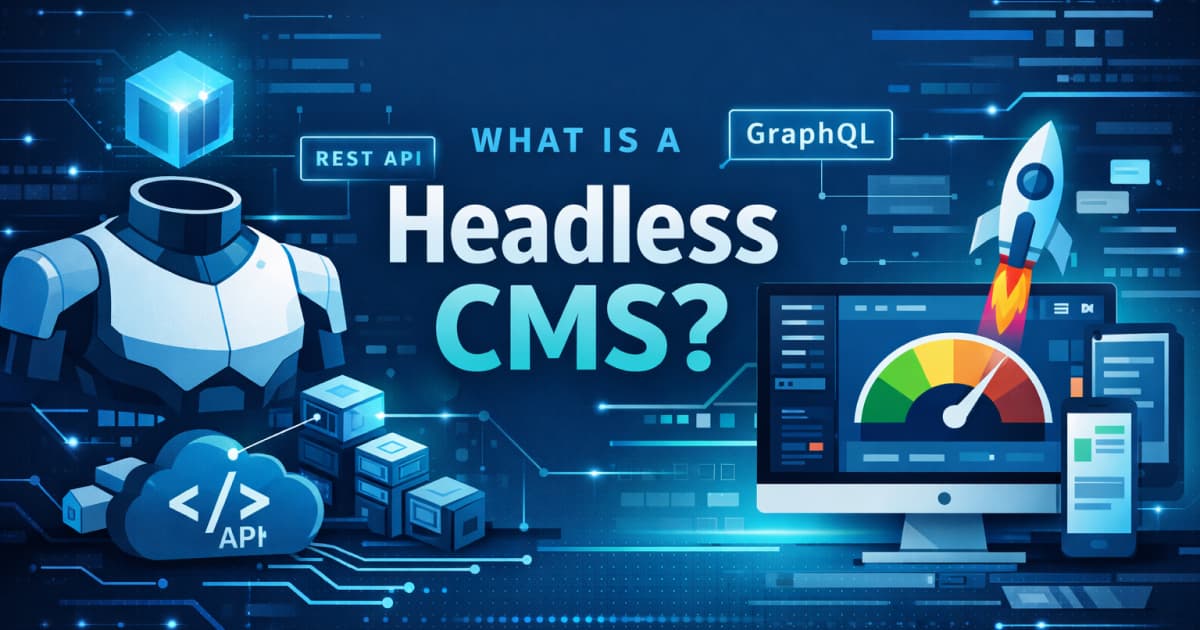
In a headless CMS, those two parts are separated.
- The CMS manages content only (the “body”)
- The frontend is built separately (the “head”)
Content is delivered to the frontend through an API (usually REST or GraphQL), allowing the website to be built using modern frameworks instead of traditional templates.
Think of it like this:
- The CMS is a content warehouse
- The website, app, or other platforms pull content from it when needed
Why Would a Business Want a Headless CMS?
A headless CMS isn’t for every business — but in the right situations, it offers real advantages.
1. Faster Website Performance
Because the frontend is decoupled from the CMS, developers can build extremely lightweight, optimized websites. This often results in:
- faster load times
- better Google PageSpeed scores
- improved SEO and user experience
2. Better Security
Since the CMS isn’t directly exposed to the public website:
- there’s a smaller attack surface
- fewer plugin and theme vulnerabilities
- improved protection against common exploits
This is especially appealing for businesses concerned about uptime and security.
3. Flexibility Across Platforms
A headless CMS allows the same content to be used in multiple places:
- websites
- mobile apps
- kiosks
- digital signage
- future platforms you haven’t built yet
You create content once and reuse it anywhere.
4. No Forced Themes or Layout Limitations
Traditional CMS themes can be restrictive. With a headless approach:
- design is completely custom
- content isn’t tied to a theme
- developers can use modern tools like Astro, Next.js, or React
This opens the door to more creative and performance-focused designs.
When a Headless CMS Might Not Be the Best Choice
Headless setups add complexity. They may not be ideal if:
- you want full visual editing directly on the page
- you rely heavily on drag-and-drop builders
- you want a simple, low-maintenance site
For many small businesses, a traditional CMS is still the best choice — and that’s okay.
Using WordPress as a Headless CMS
One of the biggest misconceptions is that moving to headless means abandoning WordPress.
In reality, WordPress works extremely well as a headless CMS.
How It Works
- WordPress handles content creation and management
- The frontend is built separately (using Astro, Next.js, etc.)
- Content is delivered via:
- WordPress REST API
- or GraphQL (with plugins like WPGraphQL)
This gives you:
- the familiarity of WordPress
- the performance of a modern frontend
- fewer plugins and less frontend bloat
Benefits of Headless WordPress
- Editors still use a familiar admin interface
- No need for traditional WordPress themes
- Better performance and scalability
- Easier long-term maintenance
It’s a best-of-both-worlds approach for many businesses.
How Feldspar Creative Helps
At Feldspar Creative, we help businesses decide whether a headless CMS actually makes sense — and build it the right way if it does.
We:
- evaluate your goals, content needs, and budget
- recommend traditional or headless setups honestly
- build fast, SEO-friendly frontends
- configure WordPress or other CMS platforms securely
- ensure long-term maintainability and performance
Headless isn’t about chasing trends — it’s about using the right tool for the job.
Final Thoughts
A headless CMS can offer incredible performance and flexibility, but it’s not a one-size-fits-all solution. For some businesses, it’s a powerful upgrade. For others, it’s unnecessary complexity.
The key is understanding why you’d use it — and implementing it correctly.
If you’re curious whether a headless CMS is right for your business, Feldspar Creative is happy to help you figure it out.
👉 Get in touch to start the conversation.