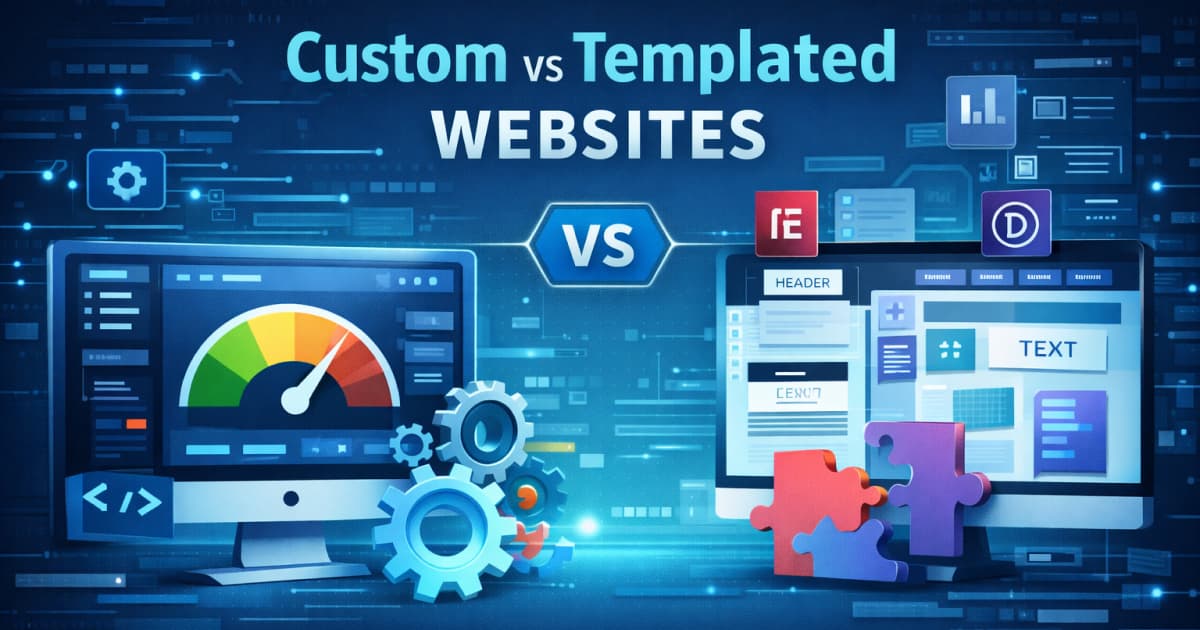
Custom vs Templated Websites: What’s the Right Choice for Your Small Business?
Author: Chris Budzban
Posted on: January 30, 2026
When it comes time to build a website, many small business owners face the same question:
Should I go with a custom website, or use a template?
There’s no one-size-fits-all answer — but there is a right choice depending on your goals, budget, and long-term plans. Understanding the differences can save you money, frustration, and costly rebuilds down the road.
Let’s break it down.
What Is a Templated Website?
A templated website is built using a pre-designed layout or system. This includes:
- Pre-made themes
- Page builders like Elementor, Divi, or similar tools
- Website builder platforms with drag-and-drop editors
Pros of Templated Websites
- Lower upfront cost
- Faster to launch
- Easy for non-technical users to edit
Cons of Templated Websites
- Limited flexibility
- Bloated code and performance issues
- Harder to customize beyond the template’s intent
- SEO limitations due to excess markup
- Can become fragile over time as plugins stack up
Many page builders generate large amounts of unnecessary code, which can slow down your site, hurt search rankings, and make future changes more difficult.
What Is a Custom Website?
A custom website is built specifically for your business — design, structure, and functionality are created intentionally around your goals.
Pros of Custom Websites
- Clean, efficient code
- Better performance and load times
- Strong SEO foundations
- Full design and content flexibility
- Easier to scale long-term
Cons of Custom Websites
- Higher initial investment
- Requires experienced developers
- Longer build time compared to off-the-shelf templates
The Problem With Many Page Builders
Page builders like Elementor or Divi can be helpful tools — but they often come with tradeoffs:
- Heavy JavaScript and CSS payloads
- Layouts tied tightly to plugins
- Difficult-to-maintain content structures
- Dependency on ongoing plugin updates
- Performance and accessibility challenges
Over time, these issues can lead to slow websites, broken layouts, and expensive rebuilds.
Feldspar Creative’s Approach: The Best of Both Worlds
At Feldspar Creative, we’ve built our own template system — but not in the traditional sense.
Instead of relying on third-party page builders, we:
- Develop custom-designed layout systems
- Maintain full control over the codebase
- Use clean, lightweight markup
- Avoid bloated plugins entirely
- Build reusable components without sacrificing performance
This means you get:
- The efficiency and cost-effectiveness of a structured system
- The flexibility and quality of a custom-built website
- Faster load times
- Better SEO
- A site that’s easier to maintain long-term
Unlike page builder templates, our system is purpose-built, not generic.
So… Custom or Template?
Here’s a simple way to think about it:
| If you want… | A template may work |
|---|---|
| A quick launch | ✅ |
| Minimal upfront cost | ✅ |
| Short-term use | ✅ |
| If you want… | Custom or Feldspar Creative system |
|---|---|
| Performance | ✅ |
| SEO visibility | ✅ |
| Accessibility | ✅ |
| Long-term growth | ✅ |
| Full control | ✅ |
Final Thoughts
Templates aren’t bad — but generic templates and bloated page builders often hold businesses back without them realizing it.
At Feldspar Creative, we believe small businesses deserve websites that are:
- Fast
- Search-friendly
- Accessible
- Built to grow with them
Our custom-built template system delivers exactly that — without locking you into fragile tools or unnecessary complexity.
If you’re trying to decide whether a custom or templated website is right for your business, we’d be happy to help you weigh the options.
👉 Contact Feldspar Creative to start the conversation.